My journey with Handloom Love

People who know me well, know I am passionate about promoting knowledge and awareness of the rich handloom heritage of India. People who know me for long know that I have not been interested in clothes or textiles beyond looking at them as necessity for the larger part of my life – handloom love is a new found love. My better half on the other hand, is a bit of an authority on sartorial elegance. He has an eye for fabrics, a sharp eye for requisite distance between buttons of a shirt and even finer nuances. So I have dragged myself along with him on his quests to find the perfect garment or accessory for him, me and our loved ones for years now.

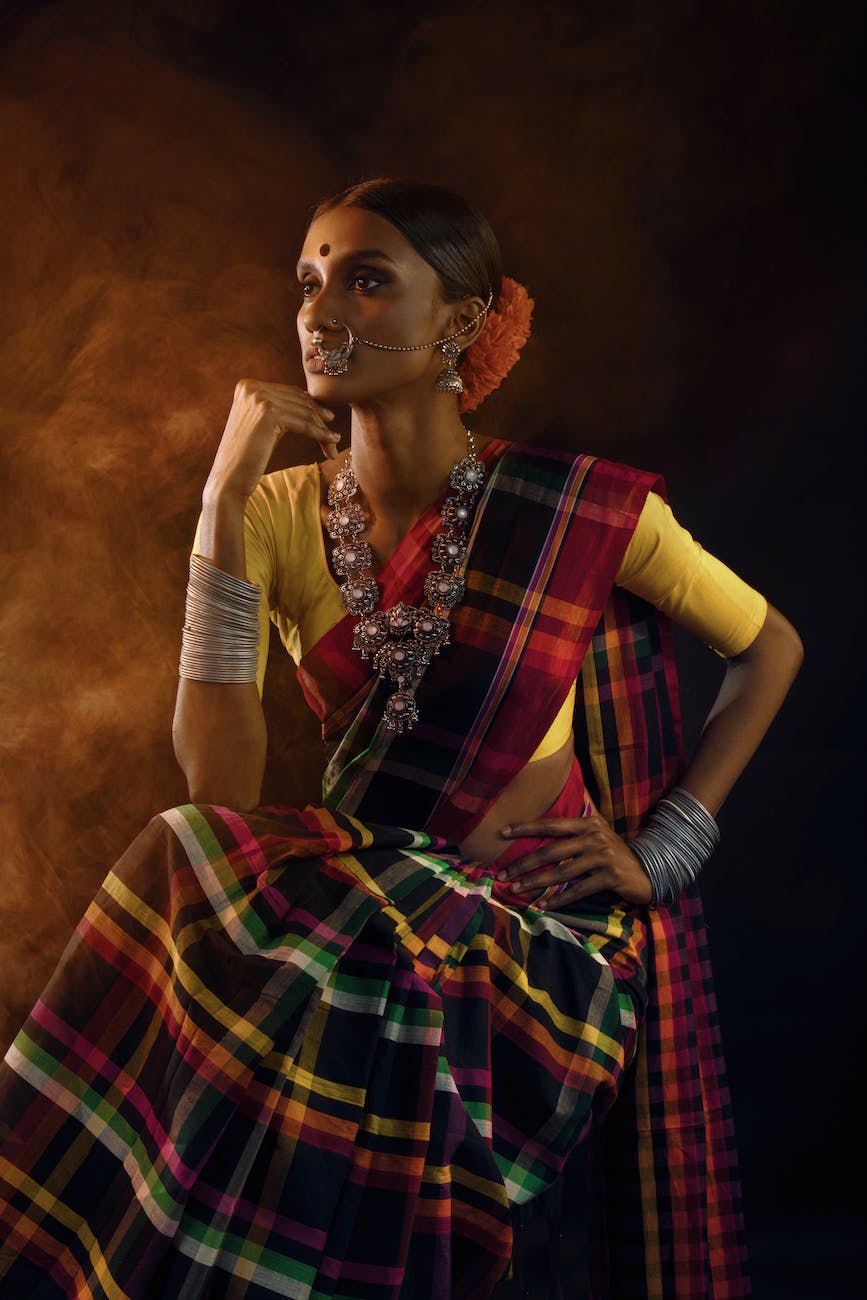
Dressing elegantly, modestly and simply has been my style mantra. Sarees have always held a special place in my heart and wardrobe. Chikankari of lucknow thus has been a constant in the wardrobe and so have the sarees from Nalli, Fabindia, Mrignayani or even the much more easy on pocket florals from GardenVarelli mills.

On one of the customary trips few years back to a craft fair, as I was shopping for my only brother’s upcoming wedding and looking for a special saree. Or Two. šŸ˜‰

Photo by Barathan Amuthan on Pexels.com

Rishi has the art of making conversation with everyone and as we got talking to the Banarasi weaver who had come to the fair, it was hours for which we kept sitting at the shop listening to the nuances of kaduwa and fekua styles of weaving and the beauty and uniqueness of Janglas and Shikargahs and Tilfis and Tanchois.. it was just awe inspiring that one city of India has numerous styles of weaving and patterns and all I knew was that a shining silk saree is called a Banarasi saree. I couldn’t even differentiate between a Kanjivaram and Banrasi back then if someone had asked me to. I didn’t know that the same saree that is woven on a loom in hours, days, weeks, months and sometimes years is cheaply imitated in a mill where thousands of imitations can be belted out in a matter of minutes. Anyway, we bought few beautiful handloom sarees and came back.

I kept looking at my saree shopping from Nalli and the Banarasi weaver from the craft fair that day and replaying the conversation in my head repeatedly. I could explain to a cousin that day the difference between the kanjivaram and Banarasi saree that I got that day. Fascinated by the special garment and the story behind it, my research oriented self went on internet to search for handloom fabrics and sarees and how they are made. Little did I know that it was a rabbit hole, so deep that I will be immersed in it for years. With hundreds of weaves, thousands of craft kinds Indian textile history is rich and changes to bring a new variation every ten miles, figuratively speaking, just like the dialects of India.

The meticulous and eco friendly processes used to weave, embroider, paint, stitch the sarees are fascinating to say the least. I found out about the muslins made in India that were so thin that you could fold a six yard saree and keep it in a matchbox. The thin as air garments that were sold for their weight in gold and played a huge part in India’s rich past of prosperity. Equally horrid are the tales of deliberate destruction of the same crafts with the advent of Industrial revolution, the mills of Europe and promotion of power mill made cloth in India.
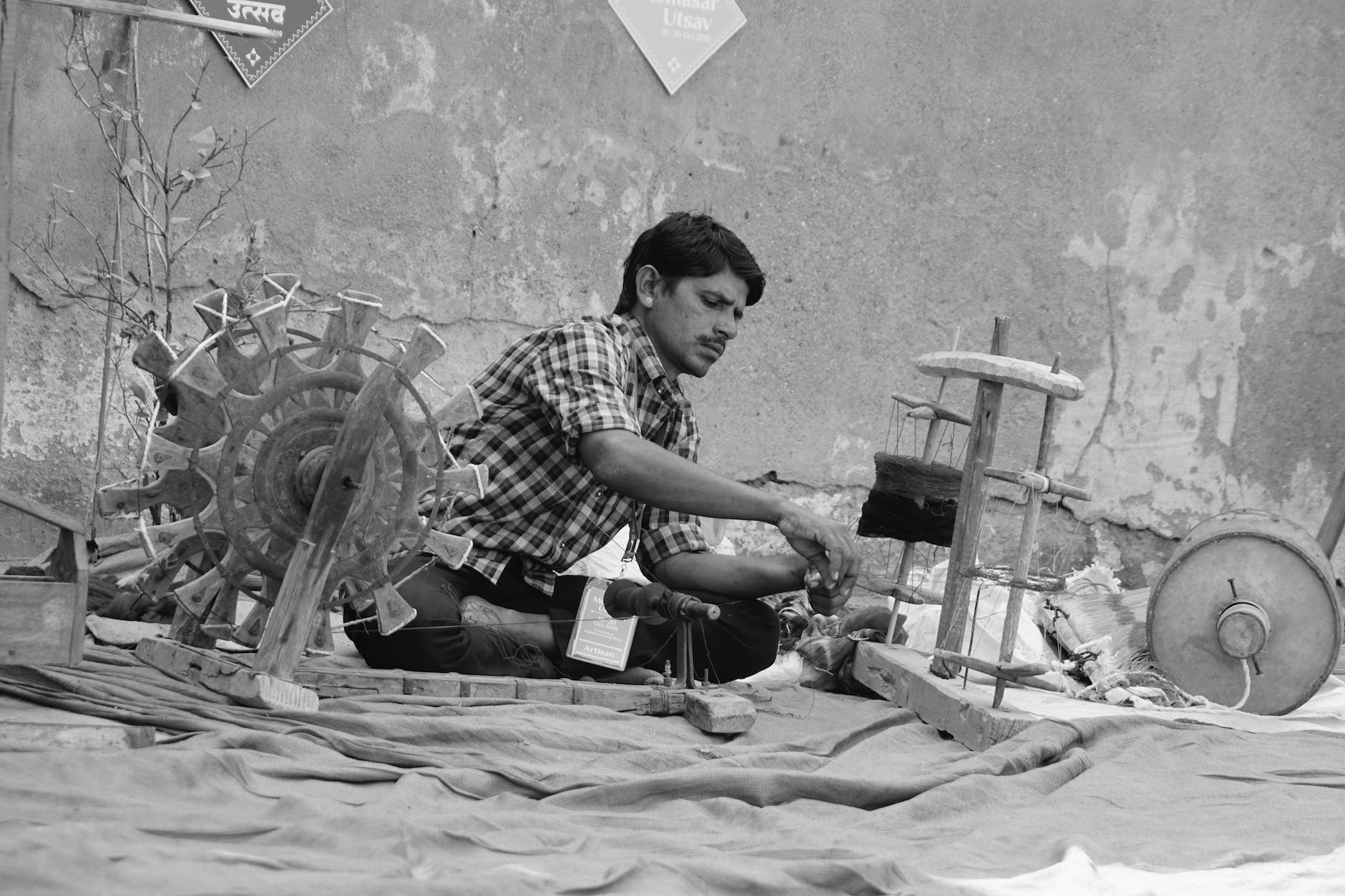
Photo by Deep Kumar on Pexels.com

There are some blessed souls who have dedicated their lives for the revival of these handicrafts and for promoting the saree. I am merely a student of the subject right now who is trying to understand about Handlooms and Handspun fabric and trying to buy more eco friendly clothing consciously, when I need to.

I truly feel it is a shame for us to not know about our rich textile history and it should be taught in school curriculum not just in fashion but from a point of view of economics, politics, art and science as well.

India ran with 20% GDP of the entire world 3-4 centuries back, a big credit of which goes to it’s textile prowess which was sytemically killed by colonisers to make us poor, needy, supliers of raw material for it to churn finished good in new found mills durin industrial revolution of the west and sold back to us while our ancestors died of famines and poverty.

The handloom produced cloth not only has a rich heritage with hundreds of art forms of weaving, embroidery and such but also is eco friendly with virtually zero negative impact on environment while fast fashion remains to be the second biggest pollutant of earth.

Slow fashion needs to be brought back in trend and made cool again. The breathable natural fabrics need to replace hoardes of cheap rayon that stuff Indian wardrobes and do nothing for the appearance of individual or the environment. I’d certainly recommend one and all to learn more about the handloom heritage of our world and invest in handloom clothing in their own small way. You’ll not only be promoting true artisans, autonomy and small businesses, but will also be contributing to creating a greener planet while ensuring you look classy!
How I ended my toxic obsession with food..

I have lived most of my late 20’s being slightly overweight and almost all of my 30’s being obese. In the past two years I have shed almost 40 kgs of extra weight which is more than 40% of body weight I have carried for a long time. Most of my weight loss happened in 2021 through a structured regime and with an expert weight loss coach. No gymming or heavy exercises were involved in this regimented weight loss program, neither were my calories restricted. Someday, I will surely share what my program was like but today I broadly want to tell you that in the crux of it, it was all about changing my relationship with food.

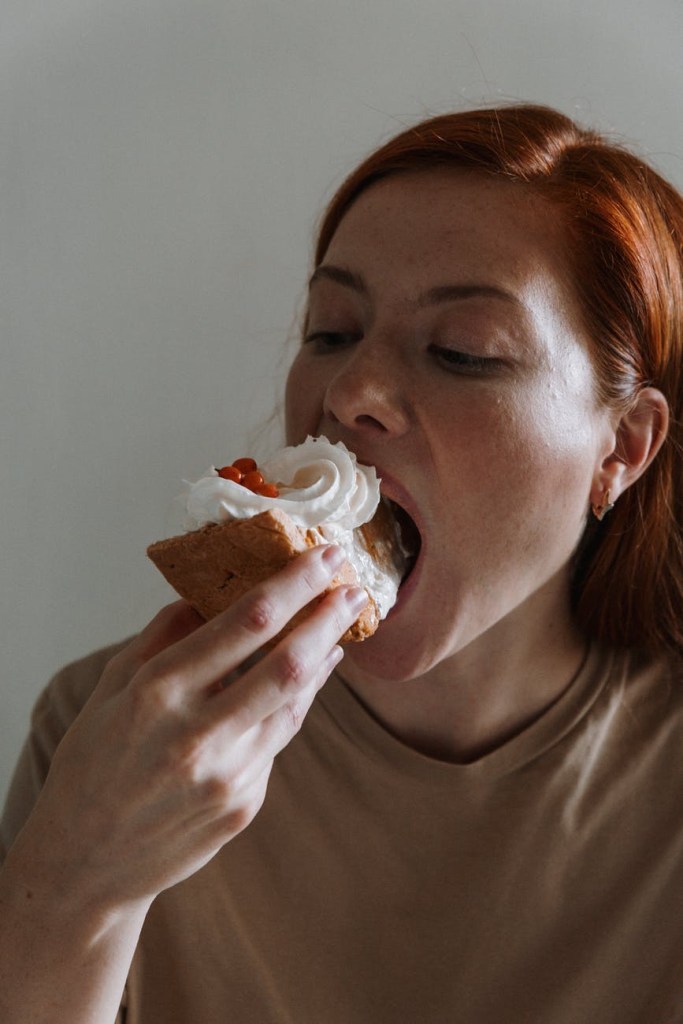
For the longest time I had been living to eat, and not eating to live. It’s a funny saying that ā€œfoodiesā€ love to say and I used to do the same. But today I want to open up about the toxic relationship I shared with food that continued for a long time.

At a difficult time, many years ago, I lost a lot of relationships instantly in life that I’d known as a child – my whole maternal and paternal family barring less than a handful of people, left my life. Uncles, aunts, cousins, all but few abandoned me. Dad wasn’t around anyway since he had passed on many years back. The relationships that I was left to count on were barely few weeks old. Work was stressful as I was growing faster in my career than my young age could handle, the expectations from a 25 year old me at a new home as an elder daughter in law were those that are from a 45 year old. Not many had seen my struggles so they didn’t care what my past or my trauma has been like or feels like, for no fault of theirs as their frame of reference couldn’t fathom what I had been through or the cushion I needed. My physical appearance had always been peculiar due to a skin condition and my metabolism was screwed. Back then, I didn’t give myself the option to say to anyone that I am not ok, that I am struggling. As a child I was taught that asking for help means you are weak! I had nowhere to hide, no one to reach for comfort and pampering. I had no friends who would be there for me, just kind acquaintances who helped if and when I asked them to.

I have always been a survivor. I instinctively turn to what will help me stay afloat and good tasting food for one reason or other was easily accessible and affordable in those days. This had come as a blessing after years of not getting tasty food either due to medical treatments or lack of money. After hours of smiling, being at my best behaviour, with no one to talk to about my real feelings, not even a proper ā€˜my’ home to go back to at the end of the day, or ā€˜parents house’ to go back to, I turned to food. I could ā€˜talk’ to good food. I could eat as much as I wanted and the food wouldn’t judge me or stare back at me for over eating it. I could eat whenever I wanted, as many times as I wanted.

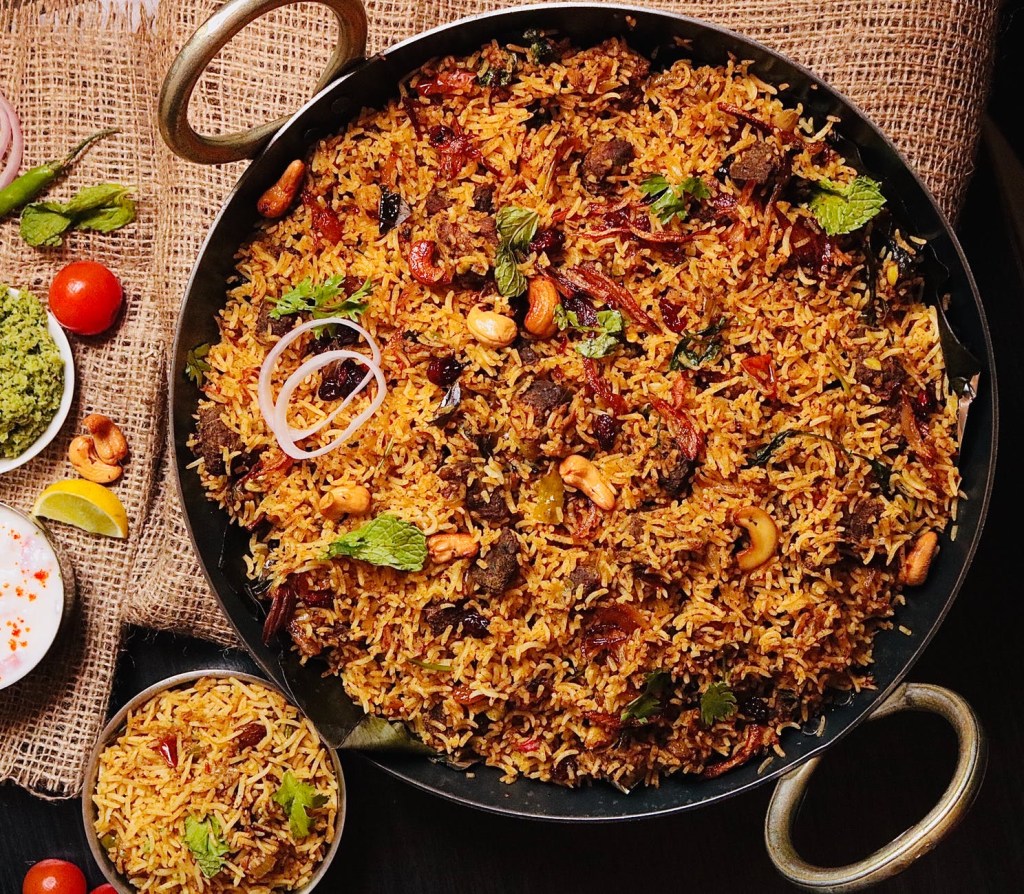
Because my coping strategies were next to nil, I couldn’t be an alcoholic or a drug addict, and because my own consumption of food was the only thing in my life that I could control, I embraced food as the only thing I could hold on to. It kept me sane. I’d counterbalance meetings with tough stakeholders or toxic colleagues with a loaded cold coffee with chocolate. I’d soothe myself for the lack of friends or family with mutton biryani. I’d end a rough day at home with six chapatis and rice along with three bowls of rice and sabzi. I’d counter lack of sleep at night by reaching the fridge post midnight to gorge on gulabjamuns or half a can of condensed milk.

I am not berating my past self for doing that as survival is tricky business. Food and consuming it this was has genuinely kept me sane, away from mental breakdowns I just couldn’t afford and dare I say, kept me alive, away from dark thoughts of ending my life many a times.

Food thus became something my soul needed. My emotions became associated with it and that’s how I gave access of my feelings and sanity to food. A good portion of my favourite food could take away the worst of experiences and help me understand and think how to cope with what’s ahead. It could soothe my bruised heart or mind and prepare me for the next days’ grind. I didn’t care if someone told me I am hogging onto it because they didn’t see the reason for my ā€˜emotional eating’ . So I’d smile, listen to their concern and ridicule it in my mind.

The few years of doing that stunted my metabolism and started putting pressure on my vital organs. Fatty liver, high cholesterol and high sugar levels became normal and by the time I wanted to lose weight, my body became resistant. It got ā€˜addicted’ to sugar, wanting frequent meals, large portions and sugar rich foods. I’d get ā€˜hangry’ and despite heavy workouts and killing myself in gyms or on jogs in hot North Indian weather the scale wouldn’t budge. The heavy workouts would make me more tired and hungry and I’d lose it and gorge back into big meals in frustration eventually giving up on diets. I was looking at weight loss as a punishment and deprivation of food and being away from food was making me sad, upset and dejected. As if, someone is taking away the only good thing in my life. The only thing I can control, the only thing that doesnt judge me.

When I met my coach and started my fitness journey last year, the first thing that changed was my relationship with food. The self coaching that I gave to myself to stop looking at food as a channel, outlet or means of solving for emotions was perhaps one of the most important things to happen in years to me. As I educated myself more and more on how excess food is poison and the damage sugar in many forms does to the body, the importance of consuming only what is needed kept becoming clearer.

Today I look at food as medicine and I have no shame in admitting that. I understand what good taste is and indulge in it once in a while, but with a clear knowledge that it is all but an indulgence. The taste of most of the food gets perceived as good because of the sugar content in it (fructose, lactose, maltose etc) and the more food is consumed for taste than need, it ends up harming the body than doing it much good.

Today I understand food must be eaten to survive, thrive and to have energy to think clearly, physically work and have a healthy body. Not eating food or fasting is as important as eating if not more and restraint has a role to play as well in keeping the body healthy.

The reason I opened up about my long toxic relationship with food is to make aware that addiction comes in many forms. Too much of anything is addiction, not just alcohol or drugs or smoking. Too much food, music, phone, whatever be that you link to your brains reward system can become an addiction.

Food is not the solution. Food is barely food. It has a place in life to help get us energy that we need for survival. If you had an addiction to food or cant live without certain food groups, or stress eat or do emotional eating, talk to a coach or a friend who can help you talk through this, solve for this.

There’s a world of health benefits on the other side of food addiction. You can enjoy your occasional meal, and yet live a healthy and fit life physically and emotionally. Just give yourself a chance.

Using planned leaves for a Lockdown Holiday – Good idea or a mistake?

When we announced right at mid march that employees in our workplace are recommended to work from home looking at covid outbreak starting in India, it didn’t feel real or long term. Like with any change, there was a denial of the changing world and situation and we took time to come to terms with what is the ‘new normal’. Now more than two months later, even if lockdown opens tomorrow and government doesn’t extend it, how willing would you be to go on and about your normal life is an aware and educated person, wherever you are in the world? Like for a lot of us, a big part of denial for me also meant, I cancelled my upcoming holiday for April immediately and like with everyone else, had it in the back of my head to ‘save’ my holidays for later, just because I am working from home. The reality of how intense work is when you are stuck at home and the effort you need to put in to connect with others and make yourself understood hadn’t hit me yet! And because everyone else is working from home, practically tied to their devices with emails, the email loops are neverending – its like playing catch with your colleagues – but virtually from respective homes. Add to that the chores with no helpers around and educating children and keeping them busy as a primary carer and you have a perfect case of third degree, day after day.

As the covid infection situation still keeps getting worse, I was at my breaking point few days back and was having an inner fight of dragging myself from weekend to weekend and pushing the idea of a ‘leave’ at the back of my head. And what were weekends, but a time to catch up on weekly chores and spend time with the family – all very short and over in a breath. Not long or restful enough, for me anyway to be back fresh and ready on a Monday.

And thats when I humbled myself and seriously considered planning that pending holiday and exploring what a holiday stuck at home would look like in lockdown? Will it be a good idea or an utter waste of my accrued paid leave, that I might actually need if the worst happened and I caught the bug? But mental health is important too, and for that reason I started planning what my lockdown holiday might look like

My Ground Rules

I had set few rules in the beginning based on which I planned a relatively shorter break of four days:

  • There will be a tech detox in these days. No office mails or messenger will be on or checked out of temptation. There will be no browsing of social media, news, netflix et al or digital video content consumption of any kind
  • I started prepping my family to understand that a day off on a working day didnt mean, I owe this time to other chores. Other than helping my 5 years old with his tech setup for online class and homework completion, I didn’t assume additional work that wouldnt have been fun. Thankfully my helper was back, who take care of basic cooking and cleaning. Even chores that I picked were what my mind directed me to do – cleaning the closet, rearranging my room etc.
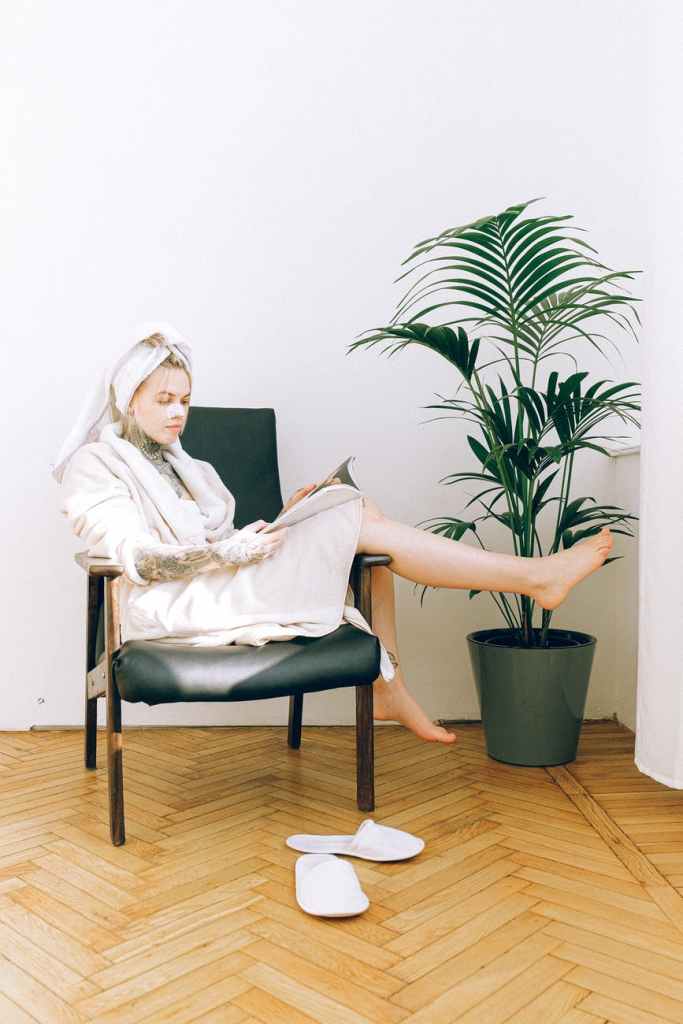
  • I will try to be quiet, listen to my mind and body and act accordingly. If my body or mind asked for sleep, I’ll give as much as needed with no guilt. I ate mindfully – cooked, baked and wrote a lot more. Listened to my favorite soothing music, walked in the garden and read a simple happy book. And I did end up sleeping an awful lot, surprisingly
  • By the end of the holiday, my mind and body felt strangely calmer. I was surprised at how much turmoil and tiredness I had without realising, and it felt cathartic to give myself that break. It was like being in calm waters after weathering a storm.

What I can tell you was that as someone who was having trouble getting up for days together well past the 9 AM mark, I could wake up refreshed early on, ready to take on the days ahead. I’d again stopped getting irritated and annoyed at my child, family and colleagues and could bring more warmth, comfort, understanding and empathy back in my communication. It refreshed me to deal with the days ahead with positivty for a while now. Until the next lockdown holiday I believe.

I can now share with you, that a working day during lockdown and a holiday during a workday/week are two extremely different experiences in the same surrondings, provided the holiday is planned well. One just needs to acknowledge the holiday, and give the attention and care to planning as you would to a holiday where you’d spent money on hotel bookings and travel tickets. Yes, everyone’s surroundings will be different and so would what holiday means to them. But the trick is in opening your mind to what you like to do unwind and chill and create that reality in your current circumstances. For some it may very well mean a movie marathon or warm baths, others might just like wine and cheese, for some it may mean putting headphones on to escape the crowded reality they live in, while for some it may very well mean video calls with family and friends and so on to counter their lonely existence from the past few months. But the three tips I can give you for a successful lockdown holiday is – unplug from what is disturbing and gives you anxiety (news and social media and work, most importantly), spend some calm time just with yourself, and pamper your body and mind with sleep and healthy food.

A lockdown holiday is not just possible, it can soothe you from the pressures that you yourself arent aware, you are dealing with. Good emotional and mental health leads to a good quality of life holistically as well. Do share your own experiences of having taken leaves during lockdown and whether it was a good idea. I’d love to know.